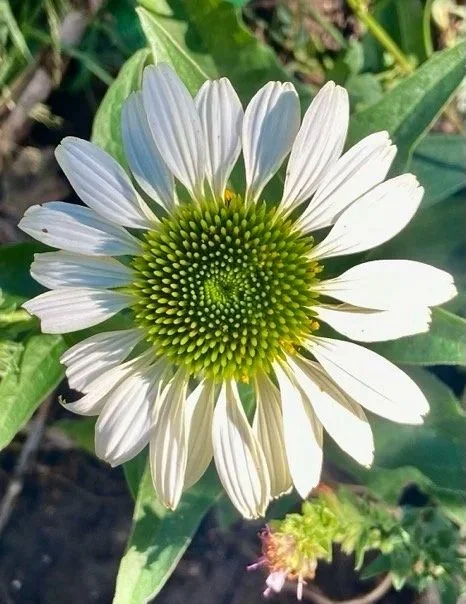
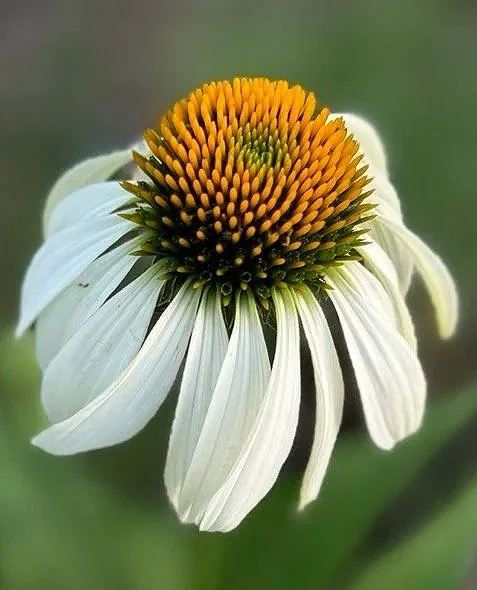
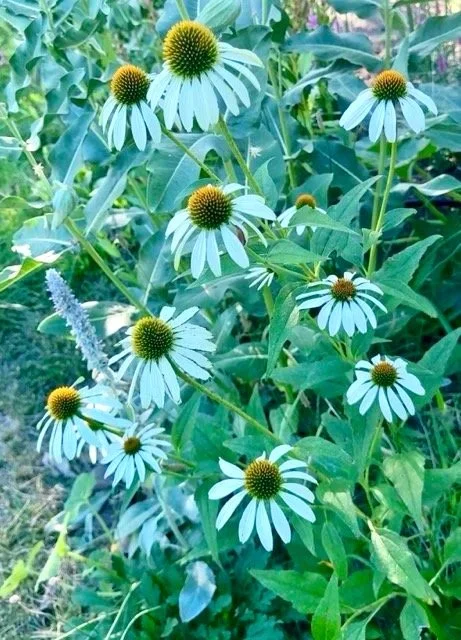
Plant Characteristics
Botanical Name: Echinacea purpurea
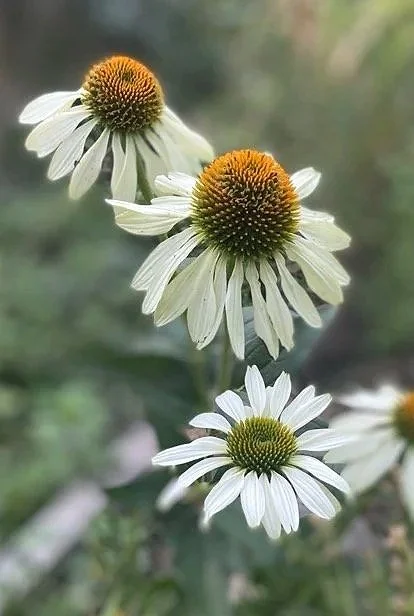
Common Name: Coneflower (white)
Native: Native
Sun: Full Sun to Part Sun
Water: Moderate
Bloom Time: Summer to fall
Bloom Color: White with orange cone
Pollinators: Bees; Butterflies
Deer Resistant: Yes
Mature Size: W 18"-24" x H 2'-3'
Soil: Well-drained; average to lean garden soil
Plant Type: Herbaceous perennial
USDA Zones: 3 to 9
Spread Habit: Clumping
Available As: Live plant
Native Region: Eastern & Central N.A. (outside western regions)
Growing Notes
Full sun to part sun in average to lean, well-drained soil. Space about 18 inches apart. It is long-lived and deep-rooted, which makes it one of the more forgiving natives for a customer starting out. Water moderately in the first year, only during a prolonged dry spell.
Water: Moderate
Sun: Full Sun to Part Sun
Soil: Well-drained; average to lean garden soil
Mature size: 2 to 4 ft by 18 to 24 in
Maintenance
Leave the seed heads standing all winter, which is the single most valuable thing you can do with this plant; goldfinches strip them through the cold months. Cut back in late spring, keeping about a third of the stems for insects. Deadheading during the season prolongs bloom but costs you the seed, so choose. Divide every four years if the center opens up.