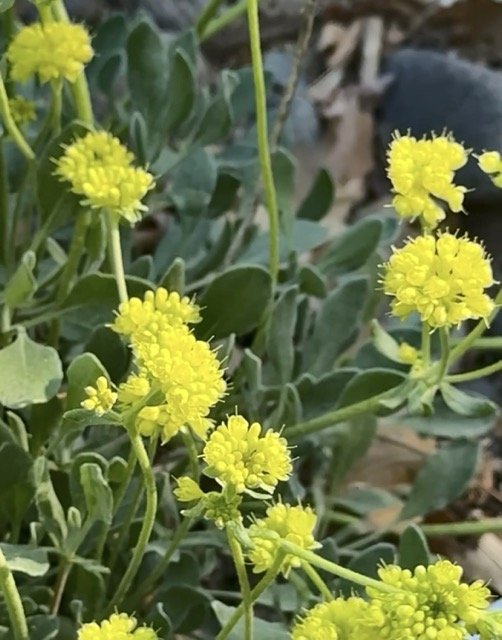
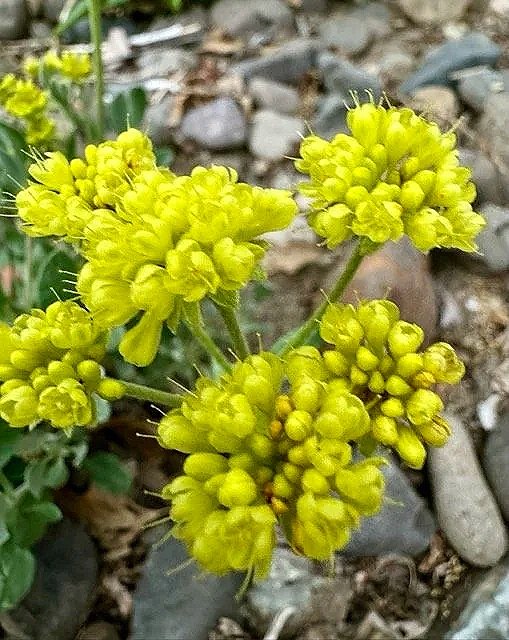
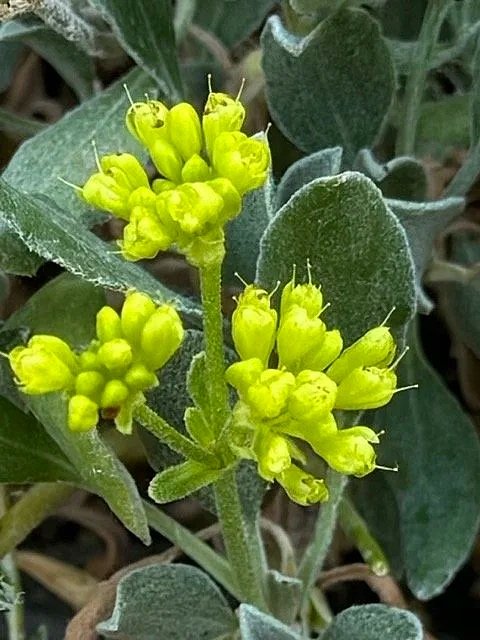
Sulfur Buckwheat (Eriogonum umbellatum)

from $8.99
Only 3 available

Botanical name: Eriogonum umbellatum • Bloom season: Summer • Bloom color: Sulfur yellow aging to rust red • Host plant (Great Basin): Comstock's hairstreak, Rocky Mountain dotted-blue, gray hairstreak, acmon blue, lupine blue, blue copper, Mormon metalmark, western green hairstreak, Lembert's hairstreak, square-spotted blue, dotted blue, glaucon blue, Icaricia texanus

Ecologically it is the heavyweight of this catalog: twenty-three butterflies have been recorded on it in Nevada, most of them blues, coppers and hairstreaks whose caterpillars depend on buckwheats specifically. Caterpillars have been found feeding on it from the Carson Range to the southern mountains. Buckwheats also carry twenty-two specialist bee species across the western US, so the plant feeds dependent bees as well as dependent butterflies.

Size:

Plant Characteristics

Botanical Name: Eriogonum umbellatum

Common Name: Sulfur Buckwheat

Native: Native

Sun: Full Sun

Water: Low

Bloom Time: Summer

Bloom Color: Sulfur yellow aging to rust red

Pollinators: Bees; Butterflies; Moths

Deer Resistant: Yes

Mature Size: W 1'-3' x H 6"-18"

Soil: Sharply drained; rocky or gravelly, lean soil

Plant Type: Herbaceous perennial subshrub

USDA Zones: 4 to 8

Spread Habit: Clumping; mat-forming

Available As: Live plant

Native Region: Great Basin; Sierra Nevada; Cascade Range; Columbia Plateau; Southern Rocky Mountains; Colorado Plateau; Northern Rockies

Host Plant (Great Basin): Comstock's hairstreak, Rocky Mountain dotted-blue, gray hairstreak, acmon blue, lupine blue, blue copper, Mormon metalmark, western green hairstreak, Lembert's hairstreak, square-spotted blue, dotted blue, glaucon blue, Icaricia texanus

Host Plant (Elsewhere in North America): Apama hairstreak, Sheridan's green hairstreak, Melissa blue

Growing Notes

Full sun and sharp drainage in rocky or gravelly, lean ground. It is a rock-garden and dry-slope plant, and the fastest way to kill it is good soil and regular water. Space about 2 feet apart. Excellent on a hot bank or in a gravel garden where nothing else will hold.

•   Water: Low

•   Sun: Full Sun

•   Soil: Sharply drained; rocky or gravelly, lean soil

•   Mature size: W 1'-3' x H 6"-18"

Maintenance

Leave the spent flower heads standing; the rust-red color is one of the best things about it through fall and winter, and the seed feeds birds. Cut back lightly in early spring if it looks untidy. No fertilizer, no summer irrigation, no division. It is long-lived if left alone.