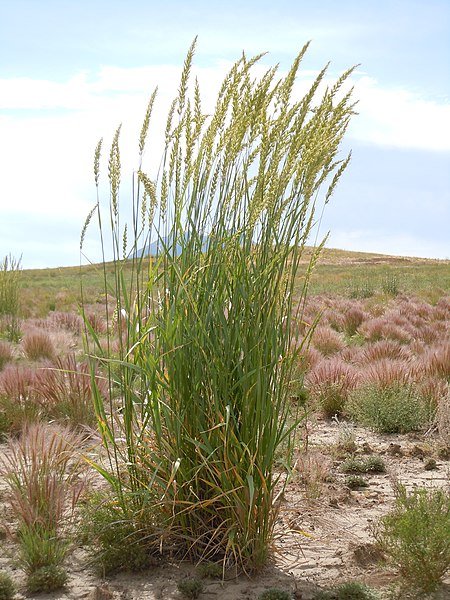


Plant Characteristics
Botanical Name: Poa secunda
Common Name: Sandberg Bluegrass
Native: Native
Sun: Full Sun
Water: Low
Bloom Time: Spring
Bloom Color: Fine tan seed heads (goes summer-dormant)
Mature Size: W 8"-12" x H 8"-18"
Soil: Well-drained; lean, rocky soil, tolerates drought by going dormant
Plant Type: Perennial bunchgrass
USDA Zones: 3 to 9
Spread Habit: Clumping bunchgrass; self-sows
Available As: Live plant
Native Region: Great Basin; Columbia Plateau; Sierra Nevada; Cascade Range; Southern Rocky Mountains; Northern Rockies (widespread)
Host Plant (Great Basin): Juba skipper
Host Plant (Elsewhere in North America): red-disked alpine, common branded skipper
Growing Notes
Full sun and lean, rocky, well-drained ground. Space about 10 inches apart. Do not water it through its summer dormancy, and do not assume it has died when it turns tan in July, because both mistakes can kill the plant. It works well as a matrix grass threaded between larger plants.
Water: Low
Sun: Full Sun
Soil: Well-drained; lean, rocky soil
Mature size: W 8"-12" x H 8"-18"
Maintenance
The Sandberg bluegrass needs almost no maintenance. Do not cut it back in summer while it is dormant; wait until early spring and comb out or trim the old growth before new growth starts. No fertilizer and no summer irrigation. It self-sows modestly into bare ground.