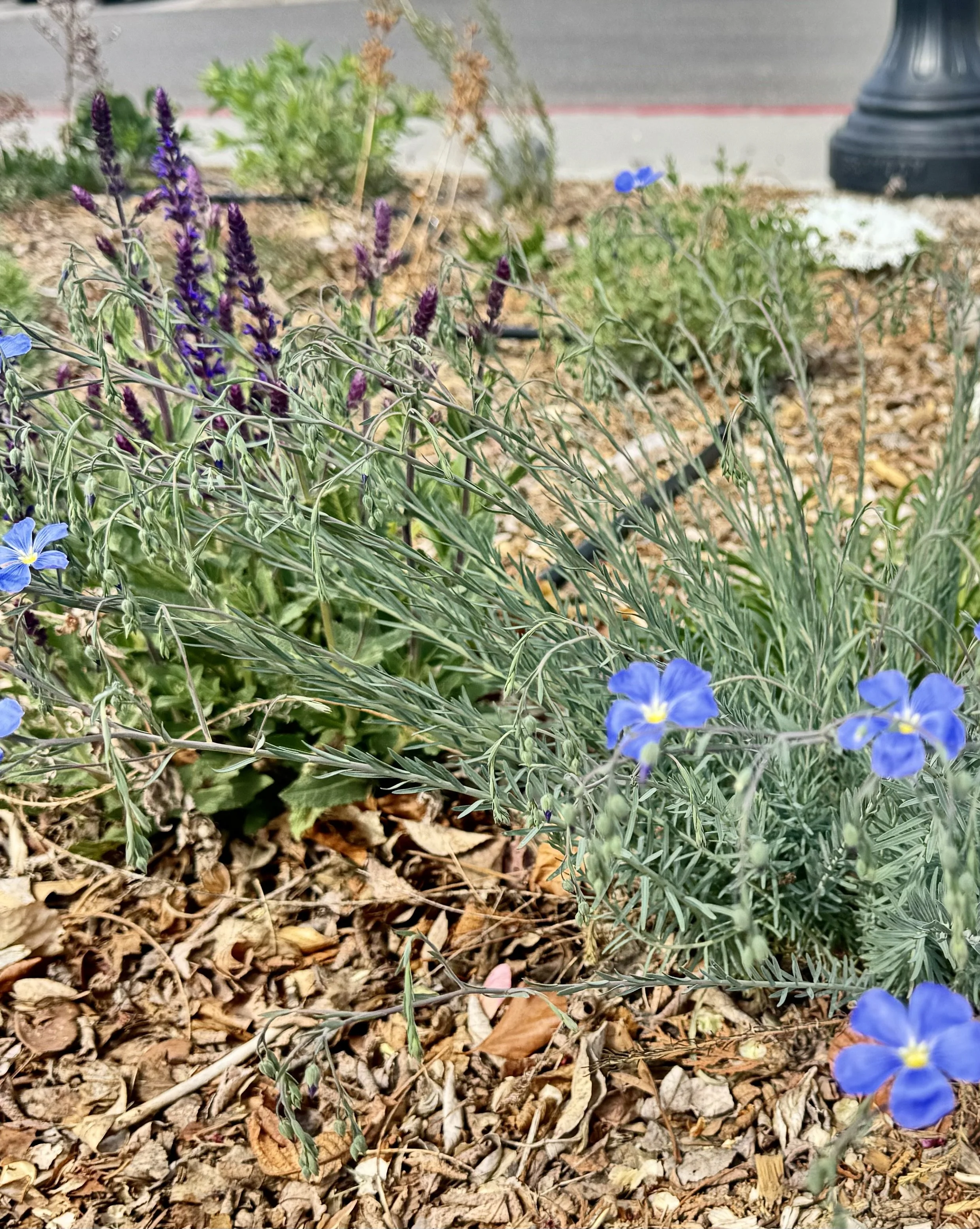
Blue Flax (Linum lewisii)

from $8.99

Botanical name: Linum lewisii Bloom season: Late spring to summer • Bloom color: Sky blue • Pollinator value: Morning pollen and nectar for native bees

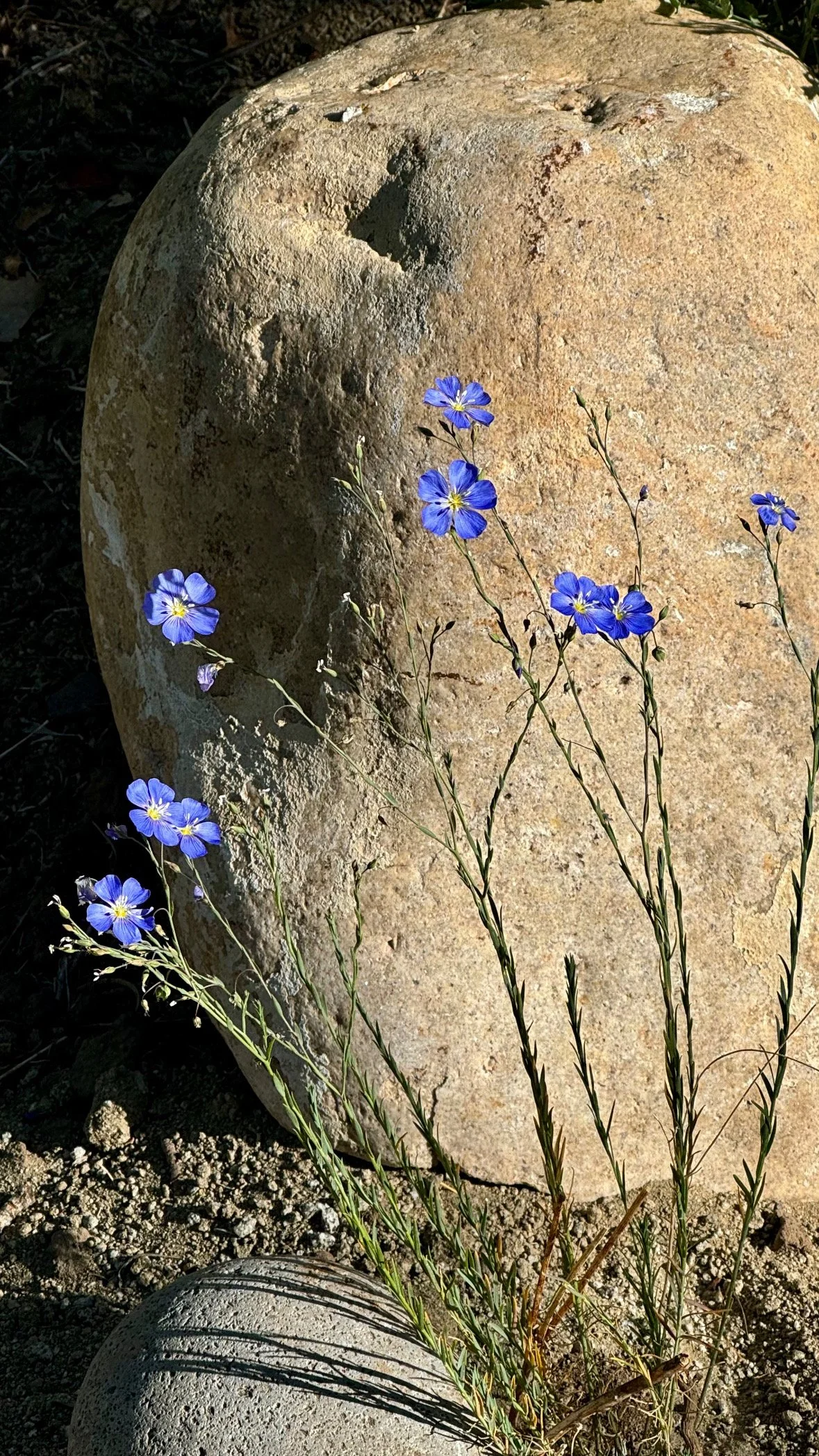
Linum lewisii grows throughout the Intermountain US. The true blue flowers float and bounce upon delicate, wispy stems and narrow blue-green leaves. Each individual flower lasts a single day, opening in the morning and dropping its petals by afternoon, and the plant produces so many in succession that a stand looks continuously in bloom for weeks. Native bees work it in the morning while the flowers are open.

Botanical name: Linum lewisii Bloom season: Late spring to summer • Bloom color: Sky blue • Pollinator value: Morning pollen and nectar for native bees

Linum lewisii grows throughout the Intermountain US. The true blue flowers float and bounce upon delicate, wispy stems and narrow blue-green leaves. Each individual flower lasts a single day, opening in the morning and dropping its petals by afternoon, and the plant produces so many in succession that a stand looks continuously in bloom for weeks. Native bees work it in the morning while the flowers are open.

Size:

Plant Characteristics

Botanical Name: Linum lewisii

Common Name: Blue Flax

Native: Native

Native Region: Great Basin; Sierra Nevada; Cascade Range; Southern Rocky Mountains; Colorado Plateau; Wyoming Basin; Western Great Plains

Sun: Full Sun

Water: Low

Bloom Time: Late spring to summer

Bloom Color: Sky blue

Pollinators: Bees

Deer Resistant: Yes

Mature Size: W 1'-1.5' x H 1'-2'

Soil: Sharply drained; lean, rocky soil

Pollinator Value: Morning pollen and nectar for native bees

Plant Type: Short-lived herbaceous perennial

USDA Zones: 3 to 9

Spread Habit: Clumping; self-sows

Available As: Live plant

Growing Notes

Full sun and sharply drained, lean, rocky soil. It is short-lived by nature and grown hard it performs better than it does in comfortable ground. Space about 12 inches apart. Excellent on a dry slope, in gravel, or in the poor soil around a new build where topsoil is thin.

  • Water: Low

  • Sun: Full Sun

  • Soil: Sharply drained; lean, rocky soil

  • Mature size: W 1'-1.5' x H 1'-2'

Maintenance

Let it self-sow, which is how a flax planting sustains itself, since individual plants last only a few years. Do not deadhead it to tidiness or you will lose the stand. Cut back spent growth in late fall or leave it for winter interest. No fertilizer and no summer water once established.