Plant Characteristics
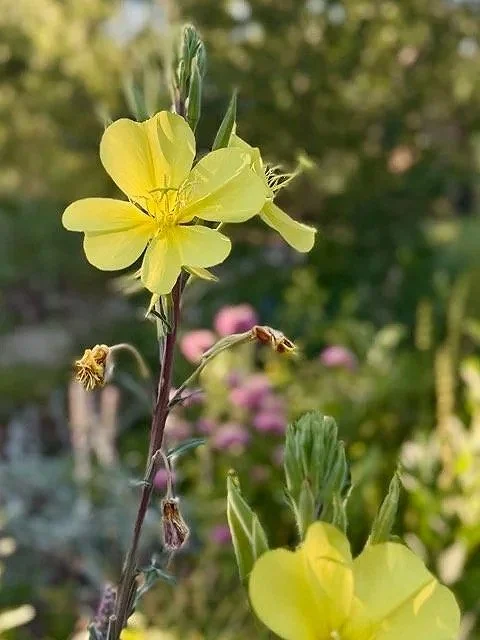
Botanical Name: Oenothera elata
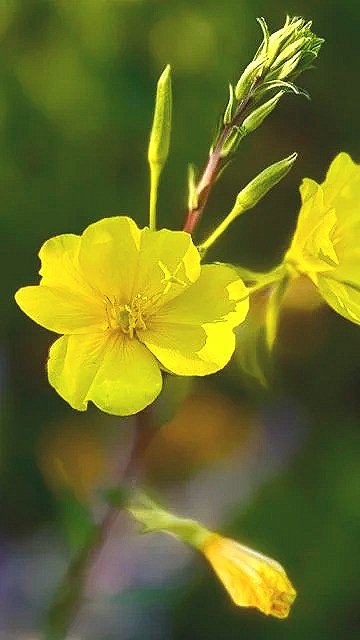
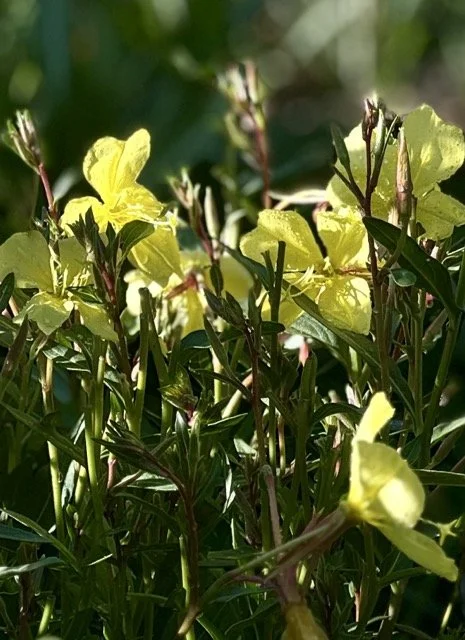
Common Name: Hooker's Evening Primrose (yellow)
Native: Native
Sun: Full Sun
Water: Moderate
Bloom Time: Summer
Bloom Color: Yellow
Pollinators: Bees; Moths; Hummingbirds
Mature Size: W 1'-2' x H 3'-6'
Soil: Well-drained; tolerates seasonally moist ground and streamsides
Plant Type: Biennial
USDA Zones: 3 to 9
Spread Habit: Self-sows
Available As: Live plant
Native Region: Great Basin; Sierra Nevada; Southern Rocky Mountains; Mojave Desert; California Floristic Province; Colorado Plateau
Host Plant (Elsewhere in North America): white-lined sphinx, primrose moth
Growing Notes
Full sun with more moisture than the dry-slope natives want; it does well where the ground stays seasonally damp, along a swale or the wet end of an irrigated bed. Space about 2 feet apart. It is biennial, so expect a rosette in year one and a flowering stalk in year two.
Water: Moderate
Sun: Full Sun
Soil: Well-drained; tolerates seasonally moist ground
Mature size: W 1'-2' x H 3'-6'
Maintenance
Let it self-sow, because that is the only way a biennial planting continues. Do not deadhead. Leave the stalks standing through winter for seed and for the hollow stems that small native bees nest in, then pull them in spring. Thin volunteers where they are too thick.