
Great Basin Wildrye (Leymus cinereus)

from $2.99

Botanical name: Leymus cinereus‍ ‍ • Bloom season: Summer‍ ‍ • Grass color: Tan seed spikes‍ over blue-green leaves ‍ • Pollinator value: Large bunch structure gives nesting and overwintering habitat for insects and birds

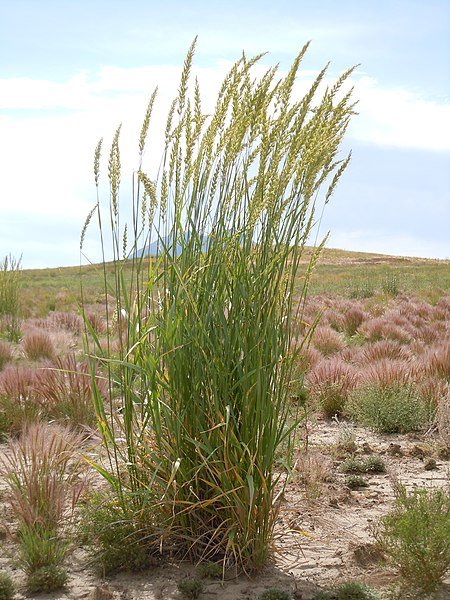
A big, upright bunchgrass that throws tall seed spikes overhead and forms a substantial blue-green clump that holds its shape through winter. It is one of the largest native grasses in the Great Basin and provides architecture in a planting. That bulk provides habitat value: it gives nesting and overwintering shelter for insects and cover for birds at a scale small grasses cannot.

📸 Leymus Cinereus Matt Lavin from Bozeman, Montana, USA, CC BY-SA 2.0

📸 Lorraine Fitzhugh Seed Tray in Vital Bee Buds Greenhouse

Photo credit: Ashley @Sage.and.Summit

Botanical name: Leymus cinereus‍ ‍ • Bloom season: Summer‍ ‍ • Grass color: Tan seed spikes‍ over blue-green leaves ‍ • Pollinator value: Large bunch structure gives nesting and overwintering habitat for insects and birds

A big, upright bunchgrass that throws tall seed spikes overhead and forms a substantial blue-green clump that holds its shape through winter. It is one of the largest native grasses in the Great Basin and provides architecture in a planting. That bulk provides habitat value: it gives nesting and overwintering shelter for insects and cover for birds at a scale small grasses cannot.

📸 Leymus Cinereus Matt Lavin from Bozeman, Montana, USA, CC BY-SA 2.0

📸 Lorraine Fitzhugh Seed Tray in Vital Bee Buds Greenhouse

Photo credit: Ashley @Sage.and.Summit

Size:

Plant Characteristics

Botanical Name: Leymus cinereus

Common Name: Great Basin Wildrye

Native: Native

Native Region: Great Basin; Wyoming Basin; Columbia Plateau; Northern Rockies; Colorado Plateau

Sun: Full Sun

Water: Low

Bloom Time: Summer

Grass Color: Tan seed spikes‍ over blue-green leaves

Mature Size: W 2'-3' x H 3'-6'

Soil: Adaptable; tolerates alkaline and seasonally moist soil

Pollinator Value: Large bunch structure gives nesting and overwintering habitat for insects and birds

Plant Type: Perennial bunchgrass

USDA Zones: 4 to 9

Spread Habit: Clumping bunchgrass

Available As: Live plant

Growing Notes

Full sun and adaptable soil; it tolerates alkaline ground and seasonally moist spots, which sets it apart from the other grasses offered at Vital Bee Buds. Space about 3 feet apart. This cool-season grass grows in spring and fall and is slow to establish before it takes off.

  • Water: Low

  • Sun: Full Sun

  • Soil: Adaptable; tolerates alkaline and seasonally moist soil

  • Mature size: W 2'-3' x H 3'-6'

Maintenance

Leave it standing all winter; the structure provides visual interest and shelter for insects. Cut back to about six inches in early spring before new growth starts. It needs no fertilizer and rarely needs division. If a clump opens in the center after many years, lift and split it in spring.