
Plant Characteristics
Botanical Name: Ribes aureum
Common Name: Golden Currant
Native: Native
Sun: Full Sun to Part Sun
Water: Low
Bloom Time: Spring
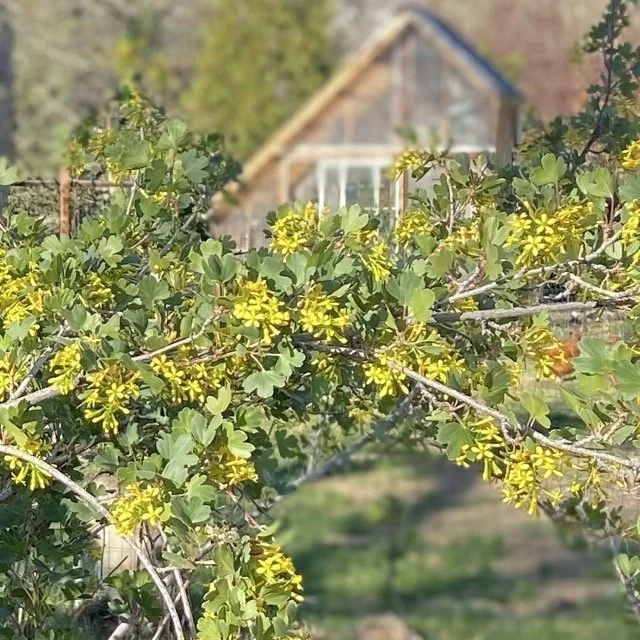
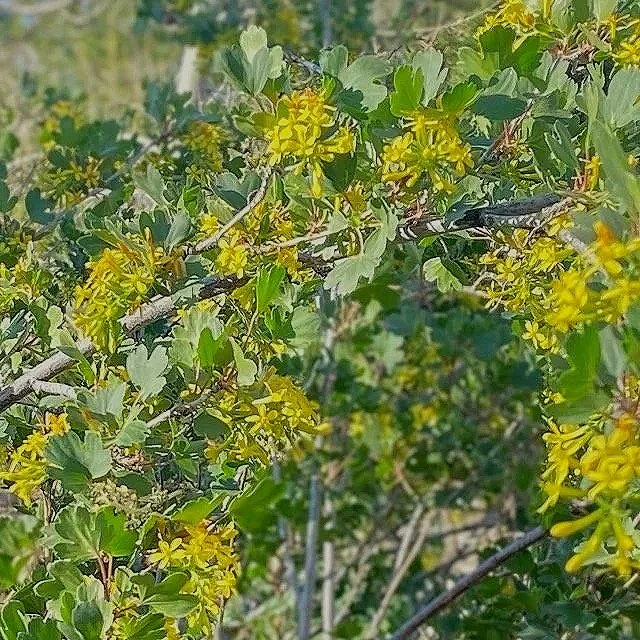
Bloom Color: Golden yellow with a clove fragrance
Pollinators: Bees; Butterflies; Hummingbirds
Mature Size: W 3'-6' x H 3'-8'
Soil: Well-drained; adaptable, tolerates seasonal dryness once established
Plant Type: Deciduous shrub
USDA Zones: 3 to 8
Spread Habit: Suckers modestly
Available As: Live plant
Native Region: Great Basin; Colorado Plateau; Southern Rocky Mountains; Columbia Plateau; California Floristic Province
Host Plant (Elsewhere in North America): peppered moth, Leptarctia californiae, Isabella tiger moth, Tharsalea arota
Growing Notes
Full sun to part sun in adaptable, well-drained soil. It tolerates seasonal dryness well once established and takes more shade than most natives here, which makes it useful on the north side of a building. Give it 5 or 6 feet of room. Water through the first two summers, then taper off.
Water: Low
Sun: Full Sun to Part Sun
Soil: Well-drained; adaptable, tolerates seasonal dryness once established
Mature size: W 3'-6' x H 3'-8'
Maintenance
Prune right after flowering rather than later, since the flower buds for next spring form on the current season's wood. Remove a few of the oldest canes at the base each year to keep it productive rather than shearing the outside. It suckers modestly; remove the shoots if you want a single clean shrub, or let it form a thicket for better bird cover.