
Plant Characteristics
Botanical Name: Amorpha fruticosa
Common Name: Indigo Bush
Native: Native
Sun: Full Sun to Part Sun
Water: Moderate
Bloom Time: Late spring to early summer
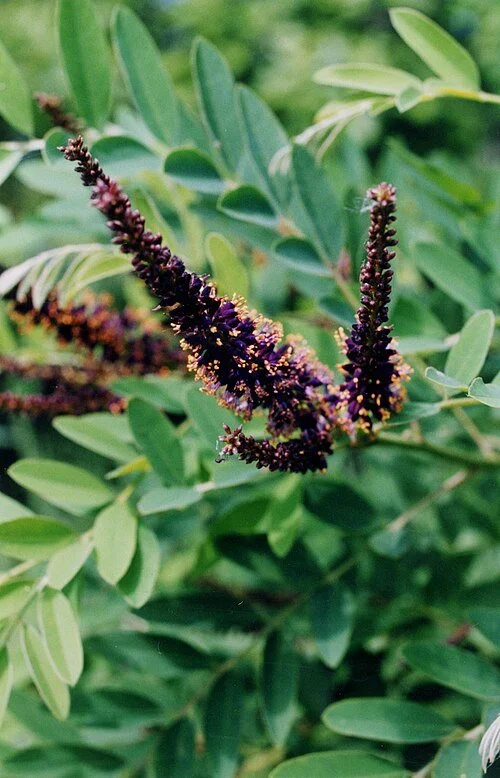
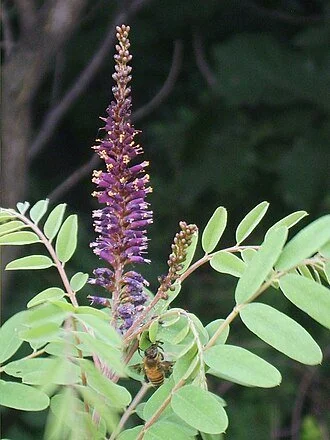
Bloom Color: Deep purple spikes with orange anthers
Pollinators: Bees; Butterflies
Mature Size: W 5'-10' x H 6'-12'
Soil: Adaptable; tolerates seasonal wet feet and poor soil
Plant Type: Deciduous shrub
USDA Zones: 4 to 9
Spread Habit: Suckers; thicket-forming
Available As: Live plant
Native Region: Eastern & Central N.A.; Western Great Plains (riparian; widely naturalized)
Host Plant (Elsewhere in North America): hoary edge, io moth, three-staff underwing, Catocala consors?, black-spotted prominent, silver-spotted skipper, southern dogface
Growing Notes
Full sun to part sun. It is one of the few plants in this catalog that tolerates seasonally wet feet, so it will take a low spot, a swale, or a ditch edge that would kill the sagebrush and the penstemons. It is also perfectly happy in poor soil. Give it room; it wants six feet or more of width at maturity.
• Water: Moderate
• Sun: Full Sun to Part Sun
• Soil: Adaptable; tolerates seasonal wet feet and poor soil
• Mature size: W 5'-10' x H 6'-12'
Maintenance
It suckers and can form a thicket, so decide early whether you want that and remove suckers annually if you do not. Prune in late winter to shape it or to keep it lower, since it flowers on new wood. It can be cut back hard and will recover. Leave the seed pods; they persist through winter and hold visual interest.