Common Evening Primrose Seeds (Oenothera biennis)

from $4.00

Botanical name: Oenothera biennis‍ ‍ • Bloom season: Summer to fall‍ ‍ • Bloom color: Lemon yellow‍ ‍ • Pollinator value: Evening-opening flowers built for hawk moths; a rare night-shift nectar plant, plus seed for finches‍ ‍ • Host plant: White-lined sphinx, Primrose moth

Seed of a biennial that works the night shift. The lemon-yellow flowers open at dusk, fast enough to watch, and hawk moths pollinate them through the evening; by mid-morning they have wilted, and the next set is waiting. Very little else in the catalog feeds the nocturnal pollinators, and the seed heads go on to feed finches through winter.‍

Botanical name: Oenothera biennis‍ ‍ • Bloom season: Summer to fall‍ ‍ • Bloom color: Lemon yellow‍ ‍ • Pollinator value: Evening-opening flowers built for hawk moths; a rare night-shift nectar plant, plus seed for finches‍ ‍ • Host plant: White-lined sphinx, Primrose moth

Seed of a biennial that works the night shift. The lemon-yellow flowers open at dusk, fast enough to watch, and hawk moths pollinate them through the evening; by mid-morning they have wilted, and the next set is waiting. Very little else in the catalog feeds the nocturnal pollinators, and the seed heads go on to feed finches through winter.‍

Size:

Sowing and Growing Notes

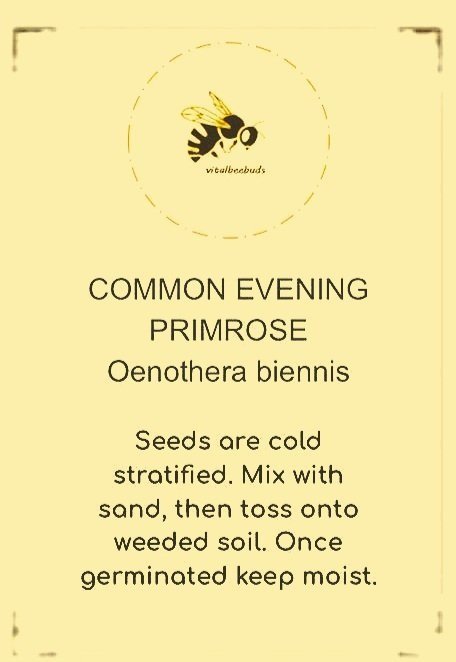
Sow in fall or early spring into full sun on poor, disturbed, well-drained ground. It genuinely prefers rough soil and will colonize a bank or a neglected strip. The seed needs light, so press it in rather than burying it. No stratification required.

  • Water: Low

  • Sun: Full Sun

  • Soil: Well-drained; poor, disturbed soil is fine

  • Mature size: W 1'-2' x H 3'-5'

Maintenance

Common Evening Primrose is biennial. It forms a flat rosette the first year, then a tall flowering stalk the second, then it dies. That means the only way to keep it going is to let it self-sow, so do not deadhead. Leave the dried stalks standing through winter for the seed and the hollow stems, and pull them in spring.