
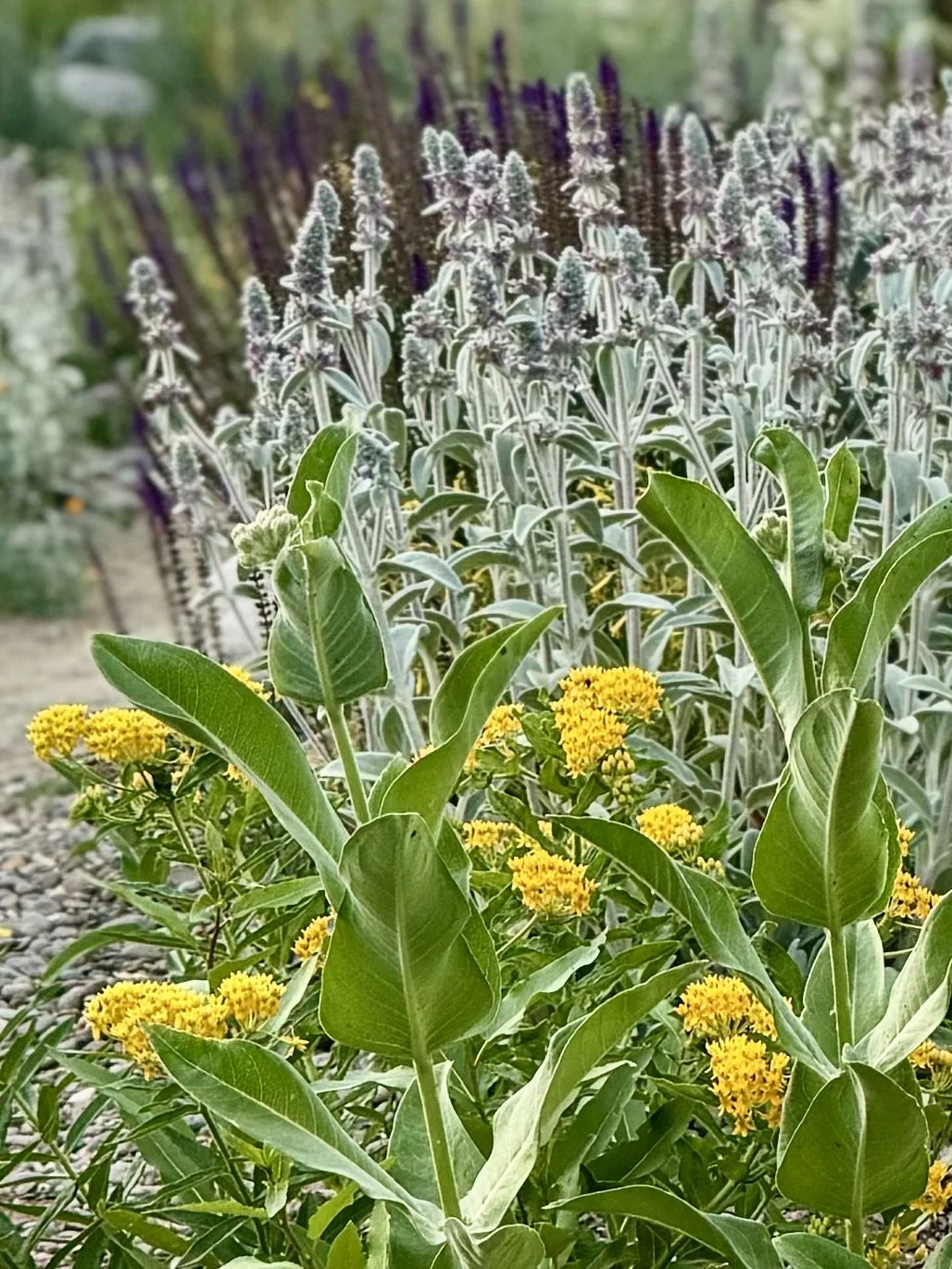
Plant Characteristics
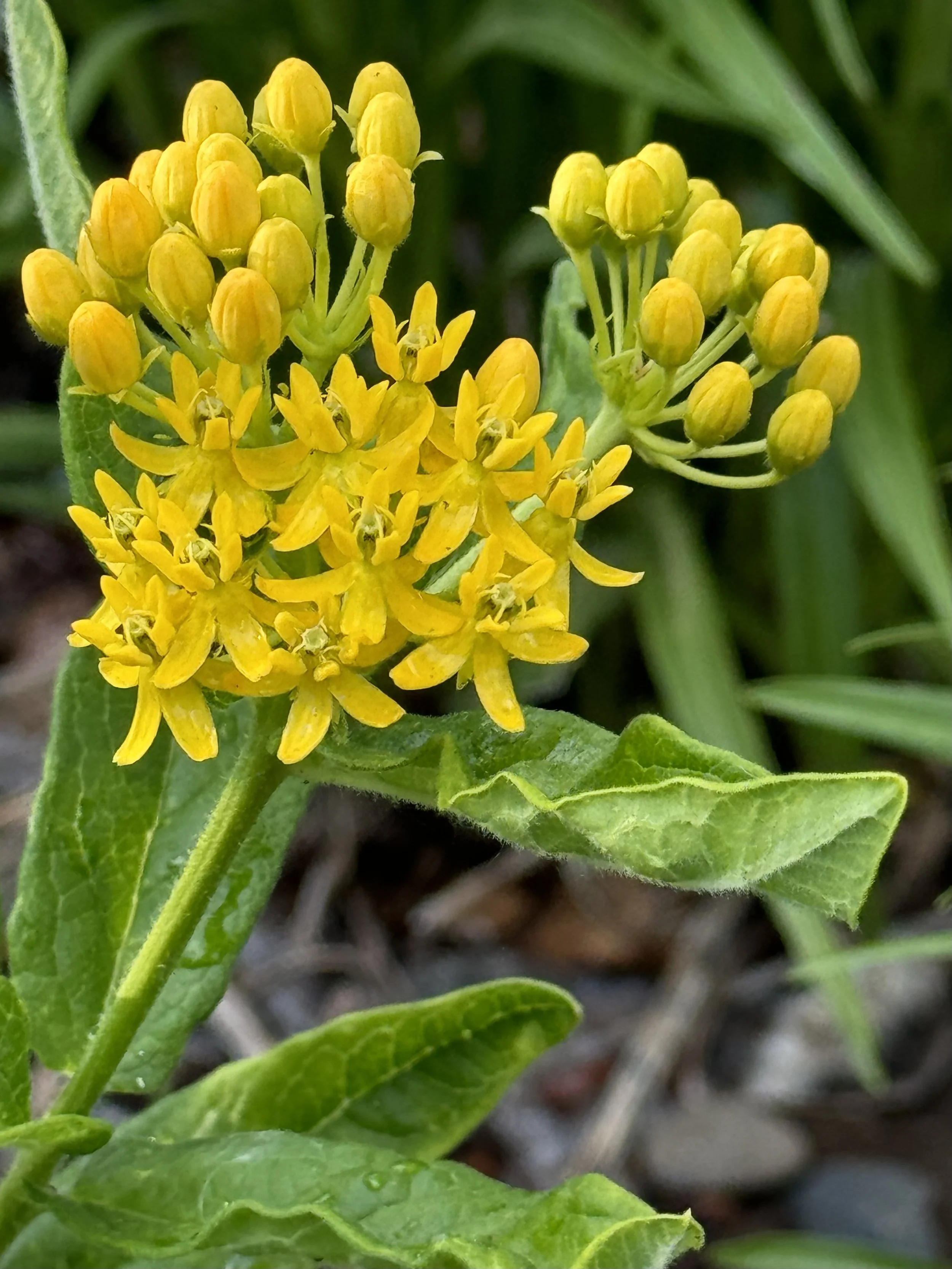
Botanical Name: Asclepias tuberosa
Cultivar: 'Hello Yellow'
Common Name: Butterfly Milkweed
Native: Cultivar
Sun: Full Sun
Water: Low
Bloom Time: Summer
Bloom Color: Clear yellow
Pollinators: Bees; Butterflies
Deer Resistant: Yes
Mature Size: W 1'-1.5' x H 1'-2'
Soil: Sharply drained; lean, sandy soil
Plant Type: Herbaceous perennial
USDA Zones: 3 to 9
Spread Habit: Clumping; deep taproot
Available As: Live plant
Native Region: Eastern & Central N.A.; Arizona-New Mexico Mountains (SW edge)
Host Plant (Elsewhere in North America): queen, monarch
Growing Notes
Full sun and sharply drained, lean soil. The deep taproot means it resents transplanting, so site it once and leave it. Space about 15 inches apart. Do not enrich the planting hole; this is a plant that performs better in poor ground than in good.
Water: Low
Sun: Full Sun
Soil: Sharply drained; lean, sandy soil, deep taproot dislikes being moved
Mature size: W 1'-1.5' x H 1'-2'
Maintenance
Leave stems standing through winter, cut back in late spring, keep about a third. Very late to emerge in spring, so mark its position. Seedlings from this cultivar will mostly revert to orange, which is not a problem unless you were counting on yellow. Never spray it, and do not attempt division.