Plant Characteristics
Botanical Name: Borago officinalis
Common Name: Borage
Native: Non-native
Sun: Full Sun
Water: Moderate
Bloom Time: Summer to fall
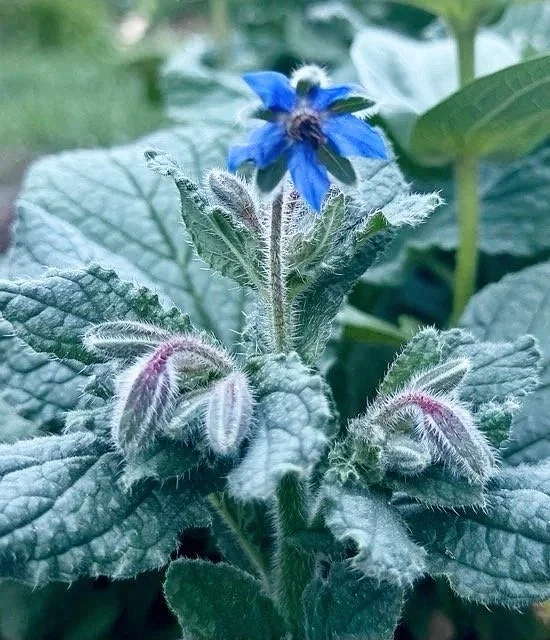
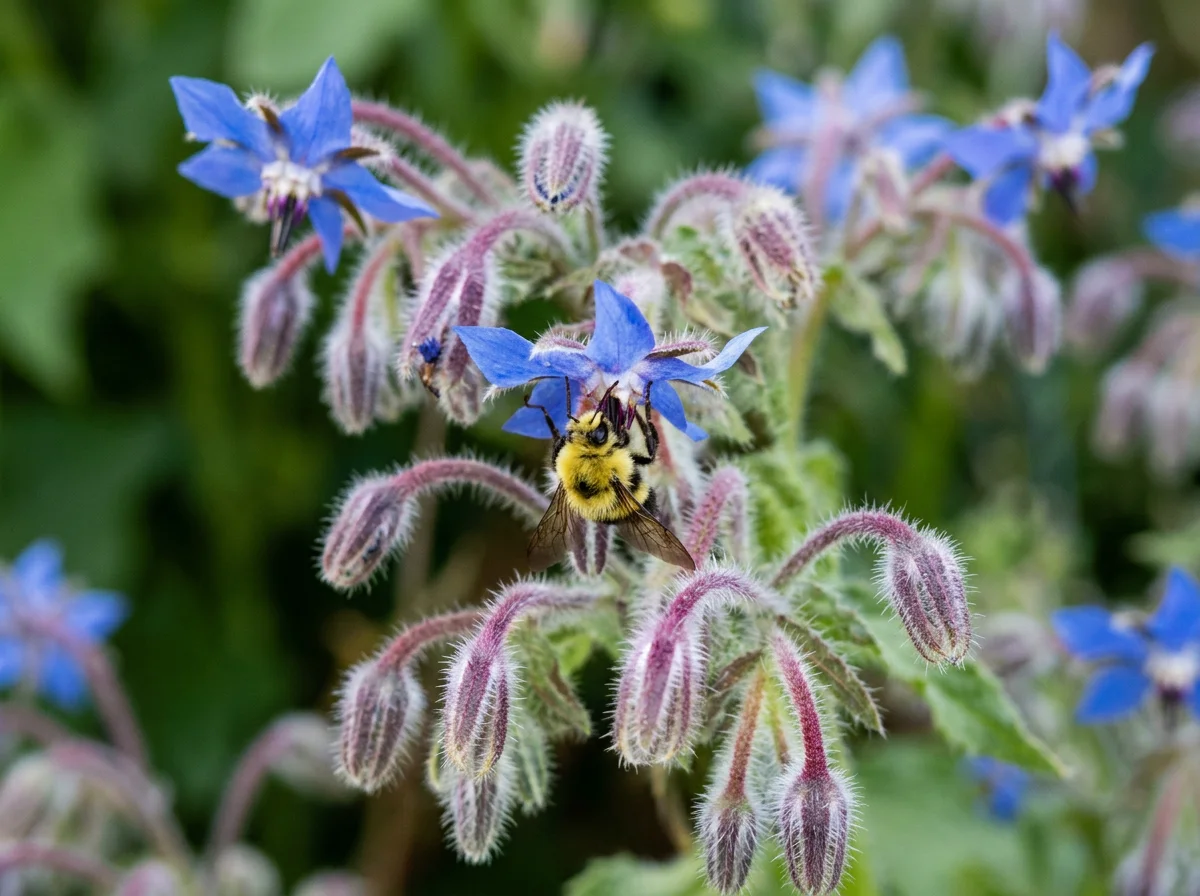
Bloom Color: Star-shaped sky blue
Pollinators: Bees
Deer Resistant: Yes
Mature Size: W 1'-2' x H 1'-3'
Soil: Well-drained; average garden soil
Plant Type: Annual
USDA Zones: 2 to 11
Spread Habit: Self-sows freely
Available As: Live plant
Native Region: Not native to North America; origin Mediterranean
Host Plant (Elsewhere in North America): Syntomeida epilais
Growing Notes
Full sun and ordinary garden soil with moderate water. Direct-sow or plant out after frost. It grows fast and gets floppy, so give it about 18 inches and let it lean on neighbors, or site it at the back. It handles heat well as long as it is not bone dry.
Water: Moderate
Sun: Full Sun
Soil: Well-drained; average garden soil
Mature size: W 1'-2' x H 1'-3'
Maintenance
Borage is an annual that self-sows freely, and a single planting usually becomes a permanent feature of the garden. Deadhead before it sets seed if you want control, or let it go and pull volunteers where you don’t want them. Pull the plant when it collapses in late summer and expect it back next spring.